
Himalayan Ibex · Gulmarg
Kashmir Great Lakes Trek
Seven days, eight alpine lakes, and three high passes — India’s finest summer walk from Sonamarg to Naranag.
Enquire / BookOverview
At a glance
Kashmir Great Lakes is the summer trek people save for. It is also called the Seven Lakes of Kashmir trek, though you actually pass eight glacier-fed basins — Vishansar, Kishansar, Gadsar, the Satsar cluster, Nundkol and Gangabal — strung through meadows, birch forest and three high passes.
We walk 65 kilometres from Shitkadi, just above Sonamarg, to Naranag. The line is famous for a reason: the colour of the water, trout in almost every stream, and nights camped under Harmukh. It is moderate to difficult. Day 4 over Gadsar Pass and the steep drop into Naranag on Day 7 ask for fitness, not technical climbing.
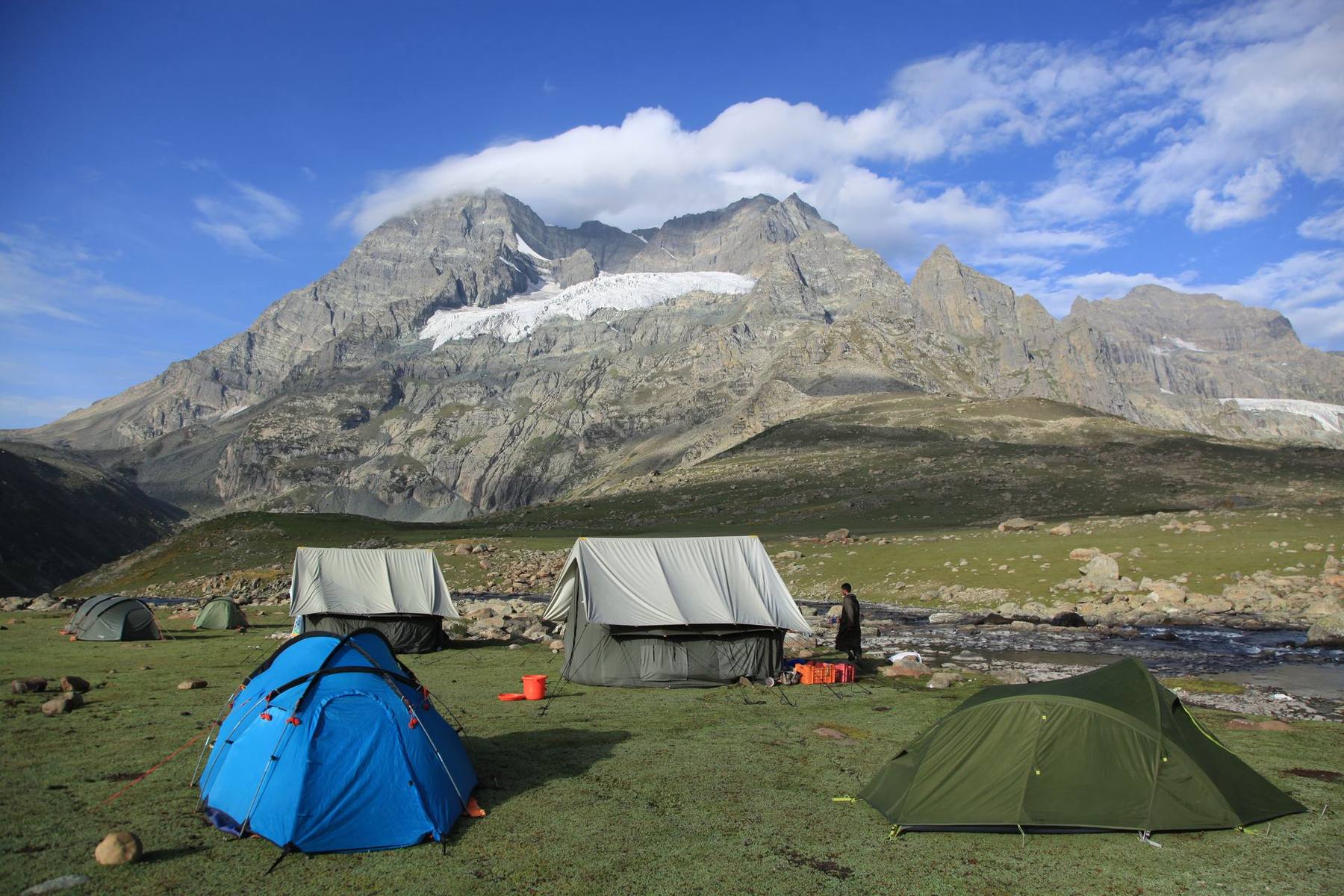
Himalayan Ibex runs this as a fully supported camp trek. Vegetarian meals, tents, qualified trek leaders, first aid and oxygen travel with you. Fixed-season windows run from June, when some lakes still hold ice, through early October, when the high passes close under snow.
Led by: Led by Himalayan Ibex trek leaders with basic and advanced mountaineering training from JIM&WS and years on these exact lakes and passes.
- Duration
- 7 Days / 6 Nights
- Distance
- 65 km
- Maximum altitude
- 4,200 m (Gadsar Pass)
- Difficulty
- Moderate to Difficult
- Start
- Sonamarg (Shitkadi base camp)
- End
- Naranag village
- Best season
- June – early October
Highlights
What stands out
- ✓Eight turquoise alpine lakes, including Vishansar, Kishansar, Gadsar, Satsar, Nundkol and Gangabal
- ✓Three high passes: Nichnai, Gadsar (4,200 m) and Zajibal (4,000 m)
- ✓Wildflower meadows in Gadsar and Satsar valleys
- ✓Camp beside glacier-fed water with Mount Harmukh on the skyline
- ✓Trout visible in lakes and river streams (fishing only with a Kashmir fisheries licence)
- ✓Finish among the old stone and walnut groves of Naranag
Itinerary
Day by day
Srinagar to Sonamarg (Shitkadi base camp)
We drive from Srinagar to Shitkadi, the meadow camp above Sonamarg. The road follows the Sindh River through villages, paddy and the first real Himalayan walls. Night one is for acclimatisation: welcome drinks, a full briefing from your trek leader, evening snacks and dinner. You sleep in camp, not in a hotel, so the altitude work starts immediately.
Sonamarg to Nichnai
The first walking day is a steady climb. Tabletop, a plateau facing the Thajwas range, is the first rest — Sonamarg opens below you and Amarnath Peak sits on the skyline. The trail then weaves jungle patches, small canals and rocky ground among maple, birch and pine. One stream crossing is helped by the team. Nichnai camp is a flower valley with a stream at the door of the tents.
Nichnai to Vishansar Valley
Packed lunch after breakfast. Nichnai Pass is the day’s climb; the far side drops steeply on rock into a wildflower meadow. Rugged faces sit on one hand, snow peaks on the other. Camp is in Vishansar Valley beside the streams that leave the lake. Trout move in the water — without a licence from the Fisheries Authority of Kashmir, fishing is forbidden.
Vishansar Valley to Gadsar
Longest and toughest day. An early start is essential.
Within the first hour you reach the twin lakes of Vishansar and Kishansar — deep blue water, trout, and religious importance. Both drain toward the Kishanganga and Gurez. A steep two-hour climb then puts you on Gadsar Pass at 4,200 m, the high point of the trek and the photograph everyone waits for. The long descent drops into Gadsar Meadow, thick with flowers and herbs. Gadsar Lake sits quietly to the left; locals still speak of the water as healing. Camp is a short walk from the shore.
Gadsar to Satsar
The kindest day on the route. After about an hour of ascent the trail opens onto Satsar Meadow — mostly level walking among seven alpine lakes that feed the Wangath. You pass some of the finest of them. Camp sits beside a river stream.
Satsar to Gangabal
Boulder hopping from the start. The climb to Zajibal Pass (4,000 m) takes about three hours; the descent is as long. You pass the largest of the Satsar lakes. From the pass the twin Gangabal lakes — Nundkol and Gangabal — appear at once. Camp is beside Nundkol with Harmukh behind you; Gangabal is a 25-minute walk. Both lakes are glacial, fed by Harmukh, and full of trout.
Gangabal to Naranag
Early breakfast, then a gentle drop through Trunkhol Meadow — yellow flowers, shepherd houses, and time for a cup of local tea. After Trunkhol the jungle begins. Butsheri Top is about thirty minutes in; from there a steep three-hour descent is the hardest drop of the week, hard on knees, ankles and toes. Tight laces, high-ankle shoes and knee caps help. The walk ends in Naranag village, where vehicles wait for the road back toward Srinagar.
What’s included
Inclusions & exclusions
Inclusions
- •All vegetarian meals on the trek (breakfast, packed lunch, evening snacks, dinner)
- •Camp stay in quality tents on a twin-sharing basis
- •Sleeping bags, mattresses, dining tents and cutlery
- •Mountaineering-qualified trek leaders, guides and cooks
- •Mountain first aid, including a medical kit and oxygen cylinder
- •All passes and permits arranged by Himalayan Ibex
Exclusions
- •Lunch on the first day
- •Personal expenses
- •Anything not listed in inclusions
- •Offloading charges
- •Transportation unless specified in your booking
FAQs
Before you book
Book this package
Tell us your preferred dates
We’ll confirm availability, group size, and any gear or transfer needs for Kashmir Great Lakes Trek.
Enquire / Book